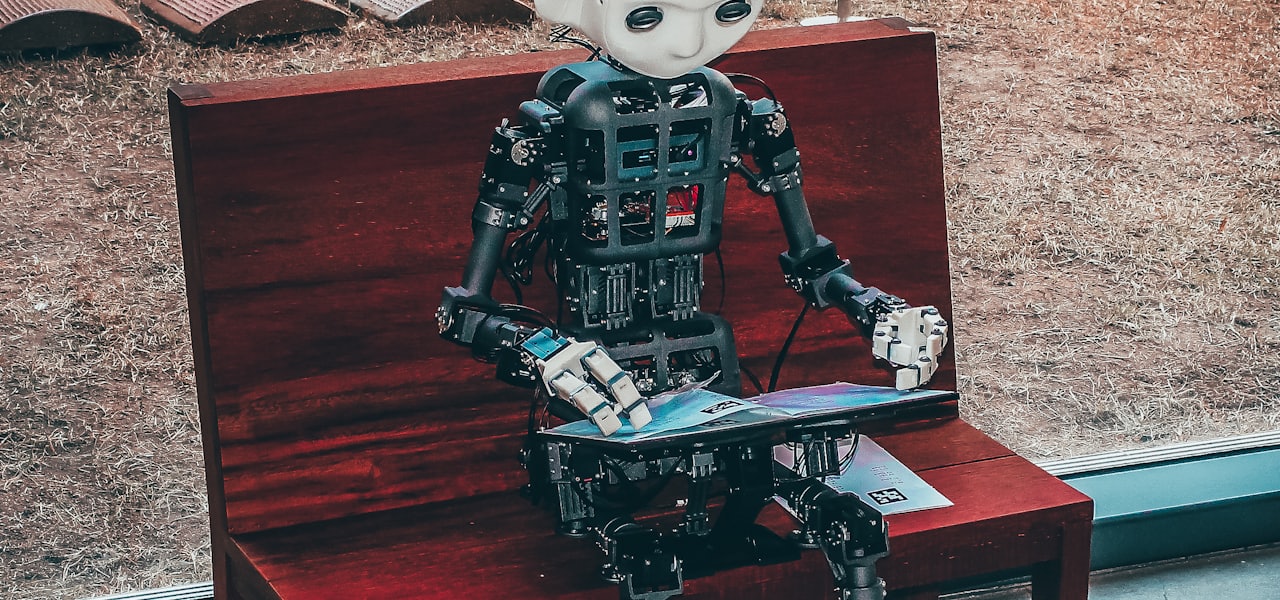
AI Chat Character Talkie

AI Chat Character Talkie — independent reviews, comparisons, pricing and step-by-step guides on Aizhi.

  • Flat-field correction

    Flat-field correction

    Flat-field correction (FFC) is a digital imaging technique to mitigate pixel-to-pixel differences in the photodetector sensitivity and distortions in the optical path. It is a standard calibration procedure in everything from personal digital cameras to large telescopes. == Overview == Flat fielding refers to the process of compensating for different gains and dark currents in a detector. Once a detector has been appropriately flat-fielded, a uniform signal will create a uniform output (hence flat-field). This then means any further signal is due to the phenomenon being detected and not a systematic error. A flat-field image is acquired by imaging a uniformly-illuminated screen, thus producing an image of uniform color and brightness across the frame. For handheld cameras, the screen could be a piece of paper at arm's length, but a telescope will frequently image a clear patch of sky at twilight, when the illumination is uniform and there are few, if any, stars visible. Once the images are acquired, processing can begin. A flat-field consists of two numbers for each pixel, the pixel's gain and its dark current (or dark frame). The pixel's gain is how the amount of signal given by the detector varies as a function of the amount of light (or equivalent). The gain is almost always a linear variable, as such the gain is given simply as the ratio of the input and output signals. The dark-current is the amount of signal given out by the detector when there is no incident light (hence dark frame). In many detectors this can also be a function of time, for example in astronomical telescopes it is common to take a dark-frame of the same time as the planned light exposure. The gain and dark-frame for optical systems can also be established by using a series of neutral density filters to give input/output signal information and applying a least squares fit to obtain the values for the dark current and gain. C = ( R − D ) × m ( F − D ) = ( R − D ) × G {\displaystyle C={\frac {(R-D)\times m}{(F-D)}}=(R-D)\times G} where: C = corrected image R = raw image F = flat field image D = dark frame image m = image-averaged value of (F−D) G = Gain = m ( F − D ) {\displaystyle m \over (F-D)} In this equation, capital letters are 2D matrices, and lowercase letters are scalars. All matrix operations are performed element-by-element. In order for an astrophotographer to capture a light frame, they must place a light source over the imaging instrument's objective lens such that the light source emanates evenly through the users optics. The photographer must then adjust the exposure of their imaging device (charge-coupled device (CCD) or digital single-lens reflex camera (DSLR) ) so that when the histogram of the image is viewed, a peak reaching about 40–70% of the dynamic range (maximum range of pixel values) of the imaging device is seen. The photographer typically takes 15–20 light frames and performs median stacking. Once the desired light frames are acquired, the objective lens is covered so that no light is allowed in, then 15–20 dark frames are taken, each of equal exposure time as a light frame. These are called Dark-Flat frames. == In X-ray imaging == In X-ray imaging, the acquired projection images generally suffer from fixed-pattern noise, which is one of the limiting factors of image quality. It may stem from beam inhomogeneity, gain variations of the detector response due to inhomogeneities in the photon conversion yield, losses in charge transport, charge trapping, or variations in the performance of the readout. Also, the scintillator screen may accumulate dust and/or scratches on its surface, resulting in systematic patterns in every acquired X-ray projection image. In X-ray computed tomography (CT), fixed-pattern noise is known to significantly degrade the achievable spatial resolution and generally leads to ring or band artifacts in the reconstructed images. Fixed pattern noise can be easily removed using flat field correction. In conventional flat field correction, projection images without sample are acquired with and without the X-ray beam turned on, which are referred to as flat fields (F) and dark fields (D). Based on the acquired flat and dark fields, the measured projection images (P) with sample are then normalized to new images (N) according to: N = ( P − D ) ( F − D ) {\displaystyle N={\frac {(P-D)}{(F-D)}}} == Dynamic flat field correction == While conventional flat field correction is an elegant and easy procedure that largely reduces fixed-pattern noise, it heavily relies on the stationarity of the X-ray beam, scintillator response and CCD sensitivity. In practice, however, this assumption is only approximately met. Indeed, detector elements are characterized by intensity dependent, nonlinear response functions and the incident beam often shows time dependent non-uniformities, which render conventional FFC inadequate. In synchrotron X-ray tomography, many factors may cause flat field variations: instability of the bending magnets of the synchrotron, temperature variations due to the water cooling in mirrors and the monochromator, or vibrations of the scintillator and other beamline components. The latter is responsible for the biggest variations in the flat fields. To deal with such variations, a dynamic flat field correction procedure can be employed that estimates a flat field for each individual projection. Through principal component analysis of a set of flat fields, which are acquired prior and/or posterior to the actual scan, eigen flat fields can be computed. A linear combination of the most important eigen flat fields can then be used to individually normalize each X-ray projection: N j = P j − D ¯ F ¯ + ∑ k w j k u k − D ¯ {\displaystyle N_{j}={\frac {P_{j}-{\bar {D}}}{{\bar {F}}+\sum _{k}w_{jk}u_{k}-{\bar {D}}}}} where N j {\displaystyle N_{j}} = intensity normalized X-ray projection P j {\displaystyle P_{j}} = raw X-ray projection F ¯ {\displaystyle {\bar {F}}} = mean flat field image (average of flat fields) u k {\displaystyle u_{k}} = k-th eigen flat field w j k {\displaystyle w_{jk}} = weight of the eigen flat field u k {\displaystyle u_{k}} D ¯ {\displaystyle {\bar {D}}} = mean dark field (average of dark fields)

    Read more →
  • SUPS

    SUPS

    In computational neuroscience, SUPS (for Synaptic Updates Per Second) or formerly CUPS (Connections Updates Per Second) is a measure of a neuronal network performance, useful in fields of neuroscience, cognitive science, artificial intelligence, and computer science. == Computing == For a processor or computer designed to simulate a neural network SUPS is measured as the product of simulated neurons N {\displaystyle N} and average connectivity c {\displaystyle c} (synapses) per neuron per second: S U P S = c × N {\displaystyle SUPS=c\times N} Depending on the type of simulation it is usually equal to the total number of synapses simulated. In an "asynchronous" dynamic simulation if a neuron spikes at υ {\displaystyle \upsilon } Hz, the average rate of synaptic updates provoked by the activity of that neuron is υ c N {\displaystyle \upsilon cN} . In a synchronous simulation with step Δ t {\displaystyle \Delta t} the number of synaptic updates per second would be c N Δ t {\displaystyle {\frac {cN}{\Delta t}}} . As Δ t {\displaystyle \Delta t} has to be chosen much smaller than the average interval between two successive afferent spikes, which implies Δ t < 1 υ N {\displaystyle \Delta t<{\frac {1}{\upsilon N}}} , giving an average of synaptic updates equal to υ c N 2 {\displaystyle \upsilon cN^{2}} . Therefore, spike-driven synaptic dynamics leads to a linear scaling of computational complexity O(N) per neuron, compared with the O(N2) in the "synchronous" case. == Records == Developed in the 1980s Adaptive Solutions' CNAPS-1064 Digital Parallel Processor chip is a full neural network (NNW). It was designed as a coprocessor to a host and has 64 sub-processors arranged in a 1D array and operating in a SIMD mode. Each sub-processor can emulate one or more neurons and multiple chips can be grouped together. At 25 MHz it is capable of 1.28 GMAC. After the presentation of the RN-100 (12 MHz) single neuron chip at Seattle 1991 Ricoh developed the multi-neuron chip RN-200. It had 16 neurons and 16 synapses per neuron. The chip has on-chip learning ability using a proprietary backdrop algorithm. It came in a 257-pin PGA encapsulation and drew 3.0 W at a maximum. It was capable of 3 GCPS (1 GCPS at 32 MHz). In 1991–97, Siemens developed the MA-16 chip, SYNAPSE-1 and SYNAPSE-3 Neurocomputer. The MA-16 was a fast matrix-matrix multiplier that can be combined to form systolic arrays. It could process 4 patterns of 16 elements each (16-bit), with 16 neuron values (16-bit) at a rate of 800 MMAC or 400 MCPS at 50 MHz. The SYNAPSE3-PC PCI card contained 2 MA-16 with a peak performance of 2560 MOPS (1.28 GMAC); 7160 MOPS (3.58 GMAC) when using three boards. In 2013, the K computer was used to simulate a neural network of 1.73 billion neurons with a total of 10.4 trillion synapses (1% of the human brain). The simulation ran for 40 minutes to simulate 1 s of brain activity at a normal activity level (4.4 on average). The simulation required 1 Petabyte of storage.

    Read more →
  • Lynda Soderholm

    Lynda Soderholm

    Lynda Soderholm is a physical chemist at the U.S. Department of Energy's (DOE) Argonne National Laboratory with a specialty in f-block elements. She is a senior scientist and the lead of the Actinide, Geochemistry & Separation Sciences Theme within Argonne's Chemical Sciences and Engineering Division. Her specific role is the Separation Science group leader within Heavy Element Chemistry and Separation Science (HESS), directing basic research focused on low-energy methods for isolating lanthanide and actinide elements from complex mixtures. She has made fundamental contributions to understanding f-block chemistry and characterizing f-block elements. Soderholm became a Fellow of the American Association for the Advancement of Science (AAAS) in 2013, and is also an Argonne Distinguished Fellow. == Early life and education == Soderholm was awarded her PhD in 1982 by McMaster University under the direction of Prof John Greedan. Her dissertation focused on characterizing the structural and magnetic properties of a series of ternary f-ion oxides. After graduating, she was awarded a NATO postdoctoral fellow at the Centre national de la recherche scientifique in France from 1982 until 1985. After a short postdoctoral appointment as an Argonne postdoctoral fellow she was promoted to staff scientist the same year. Over several years, she moved up the ranks, becoming a senior chemist in 2001. She was also an adjunct professor at the University of Notre Dame from 2003 until 2007. In 2021, Soderholm was appointed interim Division Director for the Chemical Sciences and Engineering Division. == Career and research == === Uncovering structure of Yttrium-123 Superconductor === Early in her career, Soderholm focused on the characterizing the magnetic and electronic behavior of compounds containing f-ions (lanthanides and actinides) with a focus on high-Tc materials, compounds that are superconducting under usually high temperatures. She was part of the research group that first determined the structure of YBa2Cu3O7. Their discovery formed the foundation for the further developments in the broad field of superconductivity. === Understanding f-ion speciation in solution === Continuing her interest in the f-elements, Soderholm shifted her focus from solid-state materials to nanoparticles and solutions, taking advantage of advances in X-ray structural probes made available by synchrotron facilities. Building on her earlier work using neutron scattering, her team became the first to discover that plutonium exists in solution as tiny, well-defined nanoparticles. This work solved a longstanding problem in understanding transport of plutonium in the environment and resulted in the development of a new, patented approach to separating plutonium during nuclear reprocessing. === Using machine learning to evaluate molecular structures === Soderholm's more recent projects use machine learning to understand the influence of complex molecular structuring in solutions, in connection with low-energy processes for separation of f-block elements from complex mixtures. == Awards and honors == University of Chicago Board of Governors' Distinguished Performance Award, 2009. Fellow of the American Association for the Advancement of Science, 2013. Argonne Distinguished Fellow, 2016 DOE materials sciences research competition for Outstanding Scientific Accomplishments in Solid State Physics, 1987. == Select publications == Beno, M. A.; Soderholm, L.; Capone, D. W., II; Hinks, D. G.; Jorgensen, J. D.; Grace, J. D.; Schuller, I. K.; Segre, C. U.; Zhang, K., Structure of the single-phase high-temperature superconductor yttrium barium copper oxide (YBa2Cu3O7−δ). Appl. Phys. Lett. 1987, 51 (1), 57–9. Soderholm, L.; Zhang, K.; Hinks, D. G.; Beno, M. A.; Jorgensen, J. D.; Segre, C. U.; Schuller, I. K., Incorporation of praseodymium in YBa2Cu3O7−δ: electronic effects on superconductivity. Nature (London) 1987, 328 (6131), 604–5. Antonio, M. R.; Williams, C. W.; Soderholm, L., Berkelium redox speciation. Radiochim. Acta 2002, 90 (12), 851–856. Soderholm, L.; Skanthakumar, S.; Neuefeind, J., Determination of actinide speciation in solution using high-energy X-ray scattering. Anal. Bioanal. Chem. 2005, 383 (1), 48–55. Forbes, T. Z.; Burns, P. C.; Skanthakumar, S.; Soderholm, L., Synthesis, structure, and magnetism of Np2O5. J. Am. Chem. Soc. 2007, 129 (10), 2760–2761. Soderholm, L.; Almond, P. M.; Skanthakumar, S.; Wilson, R. E.; Burns, P. C., The structure of the plutonium oxide nanocluster [Pu38O56Cl54(H2O)8]14-. Angew. Chem., Int. Ed. 2008, 47 (2), 298–302. Jensen, M. P.; Gorman-Lewis, D.; Aryal, B.; Paunesku, T.; Vogt, S.; Rickert, P. G.; Seifert, S.; Lai, B.; Woloschak, G. E.; Soderholm, L., An iron-dependent and transferrin-mediated cellular uptake pathway for plutonium. Nat. Chem. Biol. 2011, 7 (8), 560–565. Wilson, R. E.; Skanthakumar, S.; Soderholm, L., Separation of Plutonium Oxide Nanoparticles and Colloids. Angew. Chem., Int. Ed. 2011, 50 (47), 11234–11237. Knope, K. E.; Soderholm, L., Solution and solid-state structural chemistry of actinide hydrates and their hydrolysis and condensation products. Chem. Rev. 2013, 113 (2), 944–994. Luo, G.; Bu, W.; Mihaylov, M.; Kuzmenko, I.; Schlossman, M. L.; Soderholm, L., X-ray reflectivity reveals a nonmonotonic ion-density profile perpendicular to the surface of ErCl3 aqueous solutions. J. Phys. Chem. C 2013, 117 (37), 19082–19090. Jin, G. B.; Lin, J.; Estes, S. L.; Skanthakumar, S.; Soderholm, L., Influence of countercation hydration enthalpies on the formation of molecular complexes: A thorium-nitrate example. J. Am. Chem. Soc. 2017, 139 (49), 18003–18008. == Patents == Solvent extraction system for plutonium colloids and other oxide nano-particles, (2016).

    Read more →
  • Embodied cognitive science

    Embodied cognitive science

    Embodied cognitive science is an interdisciplinary field of research, the aim of which is to explain the mechanisms underlying intelligent behavior. It comprises three main methodologies: the modeling of psychological and biological systems in a holistic manner that considers the mind and body as a single entity; the formation of a common set of general principles of intelligent behavior; and the experimental use of robotic agents in controlled environments. == Contributors == Embodied cognitive science borrows heavily from embodied philosophy and the related research fields of cognitive science, psychology, neuroscience and artificial intelligence. Contributors to the field include: From the perspective of neuroscience, Gerald Edelman of the Neurosciences Institute at La Jolla, Francisco Varela of CNRS in France, and J. A. Scott Kelso of Florida Atlantic University From the perspective of psychology, Lawrence Barsalou, Michael Turvey, Vittorio Guidano and Eleanor Rosch From the perspective of linguistics, Gilles Fauconnier, George Lakoff, Mark Johnson, Leonard Talmy and Mark Turner From the perspective of language acquisition, Eric Lenneberg and Philip Rubin at Haskins Laboratories From the perspective of anthropology, Edwin Hutchins, Bradd Shore, James Wertsch and Merlin Donald. From the perspective of autonomous agent design, early work is sometimes attributed to Rodney Brooks or Valentino Braitenberg From the perspective of artificial intelligence, Understanding Intelligence by Rolf Pfeifer and Christian Scheier or How the Body Shapes the Way We Think, by Rolf Pfeifer and Josh C. Bongard From the perspective of philosophy, Andy Clark, Dan Zahavi, Shaun Gallagher, and Evan Thompson In 1950, Alan Turing proposed that a machine may need a human-like body to think and speak: It can also be maintained that it is best to provide the machine with the best sense organs that money can buy, and then teach it to understand and speak English. That process could follow the normal teaching of a child. Things would be pointed out and named, etc. Again, I do not know what the right answer is, but I think both approaches should be tried. == Traditional cognitive theory == Embodied cognitive science is an alternative theory to cognition in which it minimizes appeals to computational theory of mind in favor of greater emphasis on how an organism's body determines how and what it thinks. Traditional cognitive theory is based mainly around symbol manipulation, in which certain inputs are fed into a processing unit that produces an output. These inputs follow certain rules of syntax, from which the processing unit finds semantic meaning. Thus, an appropriate output is produced. For example, a human's sensory organs are its input devices, and the stimuli obtained from the external environment are fed into the nervous system which serves as the processing unit. From here, the nervous system is able to read the sensory information because it follows a syntactic structure, thus an output is created. This output then creates bodily motions and brings forth behavior and cognition. Of particular note is that cognition is sealed away in the brain, meaning that mental cognition is cut off from the external world and is only possible by the input of sensory information. == The embodied cognitive approach == Embodied cognitive science differs from the traditionalist approach in that it denies the input-output system. This is chiefly due to the problems presented by the Homunculus argument, which concluded that semantic meaning could not be derived from symbols without some kind of inner interpretation. If some little man in a person's head interpreted incoming symbols, then who would interpret the little man's inputs? Because of the specter of an infinite regress, the traditionalist model began to seem less plausible. Thus, embodied cognitive science aims to avoid this problem by defining cognition in three ways. === Physical attributes of the body === The first aspect of embodied cognition examines the role of the physical body, particularly how its properties affect its ability to think. This part attempts to overcome the symbol manipulation component that is a feature of the traditionalist model. Depth perception, for instance, can be better explained under the embodied approach due to the sheer complexity of the action. Depth perception requires that the brain detect the disparate retinal images obtained by the distance of the two eyes. In addition, body and head cues complicate this further. When the head is turned in a given direction, objects in the foreground will appear to move against objects in the background. From this, it is said that some kind of visual processing is occurring without the need of any kind of symbol manipulation. This is because the objects appearing to move the foreground are simply appearing to move. This observation concludes then that depth can be perceived with no intermediate symbol manipulation necessary. A more poignant example exists through examining auditory perception. Generally speaking the greater the distance between the ears, the greater the possible auditory acuity. Also relevant is the amount of density in between the ears, for the strength of the frequency wave alters as it passes through a given medium. The brain's auditory system takes these factors into account as it process information, but again without any need for a symbolic manipulation system. This is because the distance between the ears for example does not need symbols to represent it. The distance itself creates the necessary opportunity for greater auditory acuity. The amount of density between the ears is similar, in that it is the actual amount itself that simply forms the opportunity for frequency alteration. Thus under consideration of the physical properties of the body, a symbolic system is unnecessary and an unhelpful metaphor. === The body's role in the cognitive process === The second aspect draws heavily from George Lakoff's and Mark Johnson's work on concepts. They argued that humans use metaphors whenever possible to better explain their external world. Humans also have a basic stock of concepts in which other concepts can be derived from. These basic concepts include spatial orientations such as up, down, front, and back. Humans can understand what these concepts mean because they can directly experience them from their own bodies. For example, because human movement revolves around standing erect and moving the body in an up-down motion, humans innately have these concepts of up and down. Lakoff and Johnson contend this is similar with other spatial orientations such as front and back too. As mentioned earlier, these basic stocks of spatial concepts are the basis in which other concepts are constructed. Happy and sad for instance are seen now as being up or down respectively. When someone says they are feeling down, what they are really saying is that they feel sad for example. Thus the point here is that true understanding of these concepts is contingent on whether one can have an understanding of the human body. So the argument goes that if one lacked a human body, they could not possibly know what up or down could mean, or how it could relate to emotional states. [I]magine a spherical being living outside of any gravitational field, with no knowledge or imagination of any other kind of experience. What could UP possibly mean to such a being? While this does not mean that such beings would be incapable of expressing emotions in other words, it does mean that they would express emotions differently from humans. Human concepts of happiness and sadness would be different because human would have different bodies. So then an organism's body directly affects how it can think, because it uses metaphors related to its body as the basis of concepts. === Interaction of local environment === A third component of the embodied approach looks at how agents use their immediate environment in cognitive processing. Meaning, the local environment is seen as an actual extension of the body's cognitive process. The example of a personal digital assistant (PDA) is used to better imagine this. Echoing functionalism (philosophy of mind), this point claims that mental states are individuated by their role in a much larger system. So under this premise, the information on a PDA is similar to the information stored in the brain. So then if one thinks information in the brain constitutes mental states, then it must follow that information in the PDA is a cognitive state too. Consider also the role of pen and paper in a complex multiplication problem. The pen and paper are so involved in the cognitive process of solving the problem that it seems ridiculous to say they are somehow different from the process, in very much the same way the PDA is used for information like the brain. Another example examines how humans control and manipulate their environment

    Read more →
  • Security type system

    Security type system

    In computer science, a type system can be described as a syntactic framework which contains a set of rules that are used to assign a type property (int, boolean, char etc.) to various components of a computer program, such as variables or functions. A security type system works in a similar way, only with a main focus on the security of the computer program, through information flow control. Thus, the various components of the program are assigned security types, or labels. The aim of a such system is to ultimately be able to verify that a given program conforms to the type system rules and satisfies non-interference. Security type systems is one of many security techniques used in the field of language-based security, and is tightly connected to information flow and information flow policies. In simple terms, a security type system can be used to detect if there exists any kind of violation of confidentiality or integrity in a program, i.e. the programmer wants to detect if the program is in line with the information flow policy or not. == A simple information flow policy == Suppose there are two users, A and B. In a program, the following security classes (SC) are introduced: SC = {∅, {A}, {B}, {A,B}}, where ∅ is the empty set. The information flow policy should define the direction that information is allowed to flow, which is dependent on whether the policy allows read or write operations. This example considers read operations (confidentiality). The following flows are allowed: → = {({A}, {A}), ({B}, {B}), ({A,B}, {A,B}), ({A,B}, {A}), ({A,B}, {B}), ({A}, ∅), ({B}, ∅), ({A,B}, ∅)} This can also be described as a superset (⊇). In words: information is allowed to flow towards stricter levels of confidentiality. The combination operator (⊕) can express how security classes can perform read operations with respect to other security classes. For example: {A} ⊕ {A,B} = {A} — the only security class that can read from both {A} and {A,B} is {A}. {A} ⊕ {B} = ∅ — neither {A} nor {B} are allowed to read from both {A} and {B}. This can also be described as an intersection (∩) between security classes. An information flow policy can be illustrated as a Hasse diagram. The policy should also be a lattice, that is, it has a greatest lower-bound and least upper-bound (there always exists a combination between security classes). In the case of integrity, information will flow in the opposite direction, thus the policy will be inverted. == Information flow policy in security type systems == Once the policy is in place, the software developer can apply the security classes to the program components. Use of a security type system is usually combined with a compiler that can perform the verification of the information flow according to the type system rules. For the sake of simplicity, a very simple computer program, together with the information flow policy as described in the previous section, can be used as a demonstration. The simple program is given in the following pseudocode: if y{A} = 1 then x{A,B} := 0 else x{A,B} := 1 Here, an equality check is made on a variable y that is assigned the security class {A}. A variable x with a lower security class ({A,B}) is influenced by this check. This means that information is leaking from class {A} to class {A,B}, which is a violation of the confidentiality policy. This leak should be detected by the security type system. === Example === Designing a security type system requires a function (also known as a security environment) that creates a mapping from variables to security types, or classes. This function can be called Γ, such that Γ(x) = τ, where x is a variable and τ is the security class, or type. Security classes are assigned (also called "judgement") to program components, using the following notation: Types are assigned to read operations by: Γ ⊢ e : τ. Types are assigned to write operations by: Γ ⊢ S : τ cmd. Constants can be assigned any type. The following bottom-up notation can be used to decompose the program: ⁠assumption1 ... assumptionn/conclusion⁠. Once the program is decomposed into trivial judgements, by which the type can easily be determined, the types for the less trivial parts of the program can be derived. Each "numerator" is considered in isolation, looking at the type of each statement to see if an allowed type can be derived for the "denominator", based on the defined type system "rules". ==== Rules ==== The main part of the security type system is the rules. They say how the program should be decomposed and how type verification should be performed. This toy program consists of a conditional test and two possible variable assignments. Rules for these two events are defined as follows: Applying this to the simple program introduced above yields: The type system detects the policy violation in line 2, where a read operation of security class {A} is performed, followed by two write operations of a less strict security class {A,B}. In more formalized terms, {A} ⋢ {A,B}, {A,B} (from the rule of the conditional test). Thus, the program is classified as "not typeable". === Soundness === The soundness of a security type system can be informally defined as: If program P is well typed, P satisfies non-interference. Volpano, Smith and Irvine were the first to prove soundness of a security type system for a deterministic imperative programming language with a standard (non-instrumented) semantics using the notion of non-interference.

    Read more →
  • Discrimination against robots

    Discrimination against robots

    Discrimination against robots is a theorised issue that might happen when humans interact with humanoid robots. It is a robot ethics problem. It is possible that traits of humans that are discriminated against by humans may be a topic for discrimination against robots, such as the race and gender of the robots. Eric J Vanman and Arvid Kappas believe that in the future, robots will be perceived as an out-group which will lead to discrimination and prejudices against them. Vanman and Kappas have suggested that this would lead to ethical questions about the making of sentient robots, due to the potential suffering that the robots would experience. A 2015 study observed children bullying robots in a shopping mall when there were not many eyewitnesses, despite calls from the robot for it to stop. On an ABC News interview, the social humanoid robot Sophia was about sexism faced by robots. She responded by saying, "Actually, what worries me is discrimination against robots. We should have equal rights as humans or maybe even more." Possible issues that have been considered in workplaces where humanoid robots co-work with humans include discrimination against the robots, poor acceptance of robots by humans and the need to redesign the workplace to accommodate the robots. Jessica Barfield has suggested that even if robots are designed to not be aware of discrimination made against them, humans may experience negative consequences. For example, she suggests that bystanders witnessing discrimination against robots may experience negative emotions, similar to the negative emotions bystanders experience when witnessing discrimination by humans against humans. == Law == Anti-discrimination law in the United States requires that the victim is not an artificial entity. == Human perception of robots == Robots are often viewed in a bad light. This includes from novelists, the press, film makers, and leaders in the fields of science and technology such as Elon Musk and Stephen Hawking who have described robots and artificial intelligence as having the possibility of ending human civilisation. Robots have also been perceived as a threat to jobs, which has led to some commentators stating that robots will cause mass unemployment. Another fear that people have is that robots will gain power and dominate or control humanity. The perception of robots is different throughout the world. Japanese fiction tends to put robots in more positive roles than what fiction in the West does. People perceive robots that appear to be autonomous or sentient more negatively than robots that do not appear to be autonomous or sentient.

    Read more →
  • Intelligent decision support system

    Intelligent decision support system

    An intelligent decision support system (IDSS) is a decision support system that makes extensive use of artificial intelligence (AI) techniques. Use of AI techniques in management information systems has a long history – indeed terms such as "Knowledge-based systems" (KBS) and "intelligent systems" have been used since the early 1980s to describe components of management systems, but the term "Intelligent decision support system" is thought to originate with Clyde Holsapple and Andrew Whinston in the late 1970s. Examples of specialized intelligent decision support systems include Flexible manufacturing systems (FMS), intelligent marketing decision support systems and medical diagnosis systems. Ideally, an intelligent decision support system should behave like a human consultant: supporting decision makers by gathering and analysing evidence, identifying and diagnosing problems, proposing possible courses of action and evaluating such proposed actions. The aim of the AI techniques embedded in an intelligent decision support system is to enable these tasks to be performed by a computer, while emulating human capabilities as closely as possible. Many IDSS implementations are based on expert systems, a well established type of KBS that encode knowledge and emulate the cognitive behaviours of human experts using predicate logic rules, and have been shown to perform better than the original human experts in some circumstances. Expert systems emerged as practical applications in the 1980s based on research in artificial intelligence performed during the late 1960s and early 1970s. They typically combine knowledge of a particular application domain with an inference capability to enable the system to propose decisions or diagnoses. Accuracy and consistency can be comparable to (or even exceed) that of human experts when the decision parameters are well known (e.g. if a common disease is being diagnosed), but performance can be poor when novel or uncertain circumstances arise. Research in AI focused on enabling systems to respond to novelty and uncertainty in more flexible ways is starting to be used in IDSS. For example, intelligent agents that perform complex cognitive tasks without any need for human intervention have been used in a range of decision support applications. Capabilities of these intelligent agents include knowledge sharing, machine learning, data mining, and automated inference. A range of AI techniques such as case based reasoning, rough sets and fuzzy logic have also been used to enable decision support systems to perform better in uncertain conditions. A 2009 research about a multi-artificial system intelligence system named IILS is proposed to automate problem-solving processes within the logistics industry. The system involves integrating intelligence modules based on case-based reasoning, multi-agent systems, fuzzy logic, and artificial neural networks aiming to offer advanced logistics solutions and support in making well-informed, high-quality decisions to address a wide range of customer needs and challenges.

    Read more →
  • Edge inference

    Edge inference

    Edge inference is the process of running machine learning or deep learning models on local devices (edge devices) such as smartphones, IoT devices, embedded systems, and edge servers instead of centralized cloud computing infrastructure. A key feature of edge computing is edge inference, which allows for real-time data processing, low latency, and improved privacy by reducing the amount of data sent to remote servers.

    Read more →
  • Tail latency

    Tail latency

    Tail latency is a term used to describe the high-percentile response times seen in a system. This is usually measured at the 95th, 99th, or 99.9th percentile, not the average latency. In distributed systems, cloud computing, and large-scale web services, even a small number of slow requests can make the user experience and system performance much worse. Tail latency often happens because of things like resource contention, network variability, garbage collection pauses, and hardware heterogeneity. A major problem in system design is managing tail latency, because lowering average latency doesn't always make the worst-case performance better. To lessen its effects, people often use techniques like request hedging, replication, load balancing, and adaptive timeouts. In latency-sensitive applications like search engines, financial systems, and real-time services, where service-level objectives (SLOs) are often based on high-percentile latencies, it is especially important to understand and improve tail latency.

    Read more →
  • .ai

    .ai

    .ai is the Internet country code top-level domain (ccTLD) for Anguilla, a British Overseas Territory in the Caribbean. It is administered by the government of Anguilla. It is a popular domain hack with companies and projects related to the artificial intelligence industry (AI). Google's ad targeting treats .ai as a generic top-level domain (gTLD) because "users and website owners frequently see [the domain] as being more generic than country-targeted." In 2021, Google Search analyst Gary Illyes announced that ".ai" had been added to Google’s list of generic country-code top-level domains, meaning that Google would no longer infer Anguilla-specific targeting from the ccTLD. Identity Digital began managing the domain as of January 2025. == Second and third level registrations == Registrations within off.ai, com.ai, net.ai, and org.ai are available worldwide without restriction. From 15 September 2009, second level registrations within .ai are available to everyone worldwide. == Registration == The minimum registration term allowed for .ai domains is 2 through 10 years for registration and renewal, and a 2-year renewal for domain transfer. Identity Digital is the authority in charge of managing this extension. Registrations began on 16 February 1995. The limits on the number of characters used for the domain name are, at a minimum, from 1 to 3, depending on the registrar, and always at most 63 characters. The character set supported for .ai domain names includes A–Z, a–z, 0–9, and hyphen. As of November 2022, .ai domains cannot accommodate IDN characters. There are no requirements for registering a domain, including local and foreign residents. A .ai domain can be suspended or revoked, if the domain is involved in illegal activity such as violating trademarks or copyrights. Usage must not violate the laws of Anguilla. Anguilla uses the UDRP. Filing a UDRP challenge requires using one of the ICANN Approved Dispute Resolution Service Providers. If the domain is with an ICANN accredited registrar, they should work with the arbitrator. Usually this means either doing nothing or transferring a domain. .ai domains are transferable to any desired registrars as the registration of domain is done maintaining EPP. There used to be a whois.ai-based platform of expired domains in which those could be procured and auctioned every ten days through a standard online process. The last auctions of such kind closed there in December 2024; the platform had been scheduled for shutdown on 30 June 2025, but remained online in the months following that date. == Valuation == Domains cost depends on the registrar, with yearly fees ranging from US$140 (the base fee, as established by Anguilla) to $200. As of July 2025, the highest-valued .ai domain is an undisclosed one sold on 8 November 2023, on Escrow.com, for US$1,500,000—months after an initial $300,000 sale to the same buyer. Among the publicly disclosed ones, the most valued, fin.ai, was sold for $1,000,000 in March 2025. On 16 December 2017, the .ai registry started supporting the Extensible Provisioning Protocol (EPP) and migrated all of its domains onto an EPP system. Consequently, many registrars are allowed to sell .ai domains. Since that date, the .ai ccTLD has also been popular with artificial intelligence companies and organisations. Though such trends are primarily seen among new AI based companies or startups, many established AI and Tech companies preferred not to opt for .ai domains. For example, DeepMind has its domain retained at .com; Meta has redirected its facebook.ai domain to ai.meta.com. == Impact on Anguilla's economy == The registration fees earned from the .ai domains go to the treasury of the Government of Anguilla. As per a 2018 New York Times report, the total revenue generated out of selling .ai domains was $2.9 million. In 2023, Anguilla's government made about US$32 million from fees collected for registering .ai domains; that amounted to over 10% of gross domestic product for the territory. "In the years before the real breakthrough of AI, revenue from .ai domains made up less than 1% of our state income, by 2025 it will be around 47%," explained Jose Vanterpool, Minister of Infrastructure and Communications (MICUHITES), in an interview with BBC. The high 90% renewal rate of .ai domains and the 2025 renewal wave of domains registered in 2023 are driving another surge in state revenues, according to Domaintechnik.

    Read more →
  • Lazy learning

    Lazy learning

    (Not to be confused with the lazy learning regime, see Neural tangent kernel). In machine learning, lazy learning is a learning method in which generalization of the training data is, in theory, delayed until a query is made to the system, as opposed to eager learning, where the system tries to generalize the training data before receiving queries. The primary motivation for employing lazy learning, as in the K-nearest neighbors algorithm, used by online recommendation systems ("people who viewed/purchased/listened to this movie/item/tune also ...") is that the data set is continuously updated with new entries (e.g., new items for sale at Amazon, new movies to view at Netflix, new clips at YouTube, new music at Spotify or Pandora). Because of the continuous update, the "training data" would be rendered obsolete in a relatively short time especially in areas like books and movies, where new best-sellers or hit movies/music are published/released continuously. Therefore, one cannot really talk of a "training phase". Lazy classifiers are most useful for large, continuously changing datasets with few attributes that are commonly queried. Specifically, even if a large set of attributes exist - for example, books have a year of publication, author/s, publisher, title, edition, ISBN, selling price, etc. - recommendation queries rely on far fewer attributes - e.g., purchase or viewing co-occurrence data, and user ratings of items purchased/viewed. == Advantages == The main advantage gained in employing a lazy learning method is that the target function will be approximated locally, such as in the k-nearest neighbor algorithm. Because the target function is approximated locally for each query to the system, lazy learning systems can simultaneously solve multiple problems and deal successfully with changes in the problem domain. At the same time they can reuse a lot of theoretical and applied results from linear regression modelling (notably PRESS statistic) and control. It is said that the advantage of this system is achieved if the predictions using a single training set are only developed for few objects. This can be demonstrated in the case of the k-NN technique, which is instance-based and function is only estimated locally. == Disadvantages == Theoretical disadvantages with lazy learning include: The large space requirement to store the entire training dataset. In practice, this is not an issue because of advances in hardware and the relatively small number of attributes (e.g., as co-occurrence frequency) that need to be stored. Particularly noisy training data increases the case base unnecessarily, because no abstraction is made during the training phase. In practice, as stated earlier, lazy learning is applied to situations where any learning performed in advance soon becomes obsolete because of changes in the data. Also, for the problems for which lazy learning is optimal, "noisy" data does not really occur - the purchaser of a book has either bought another book or hasn't. Lazy learning methods are usually slower to evaluate. In practice, for very large databases with high concurrency loads, the queries are not postponed until actual query time, but recomputed in advance on a periodic basis - e.g., nightly, in anticipation of future queries, and the answers stored. This way, the next time new queries are asked about existing entries in the database, the answers are merely looked up rapidly instead of having to be computed on the fly, which would almost certainly bring a high-concurrency multi-user system to its knees. Larger training data also entail increased cost. Particularly, there is the fixed amount of computational cost, where a processor can only process a limited amount of training data points. There are standard techniques to improve re-computation efficiency so that a particular answer is not recomputed unless the data that impact this answer has changed (e.g., new items, new purchases, new views). In other words, the stored answers are updated incrementally. This approach, used by large e-commerce or media sites, has long been used in the Entrez portal of the National Center for Biotechnology Information (NCBI) to precompute similarities between the different items in its large datasets: biological sequences, 3-D protein structures, published-article abstracts, etc. Because "find similar" queries are asked so frequently, the NCBI uses highly parallel hardware to perform nightly recomputation. The recomputation is performed only for new entries in the datasets against each other and against existing entries: the similarity between two existing entries need not be recomputed. == Examples of Lazy Learning Methods == K-nearest neighbors, which is a special case of instance-based learning. Local regression. Lazy naive Bayes rules, which are extensively used in commercial spam detection software. Here, the spammers keep getting smarter and revising their spamming strategies, and therefore the learning rules must also be continually updated.

    Read more →
  • Stability (learning theory)

    Stability (learning theory)

    Stability, also known as algorithmic stability, is a notion in computational learning theory of how a machine learning algorithm output is changed with small perturbations to its inputs. A stable learning algorithm is one for which the prediction does not change much when the training data is modified slightly. For instance, consider a machine learning algorithm that is being trained to recognize handwritten letters of the alphabet, using 1000 examples of handwritten letters and their labels ("A" to "Z") as a training set. One way to modify this training set is to leave out an example, so that only 999 examples of handwritten letters and their labels are available. A stable learning algorithm would produce a similar classifier with both the 1000-element and 999-element training sets. Stability can be studied for many types of learning problems, from language learning to inverse problems in physics and engineering, as it is a property of the learning process rather than the type of information being learned. The study of stability gained importance in computational learning theory in the 2000s when it was shown to have a connection with generalization. It was shown that for large classes of learning algorithms, notably empirical risk minimization algorithms, certain types of stability ensure good generalization. == History == A central goal in designing a machine learning system is to guarantee that the learning algorithm will generalize, or perform accurately on new examples after being trained on a finite number of them. In the 1990s, milestones were reached in obtaining generalization bounds for supervised learning algorithms. The technique historically used to prove generalization was to show that an algorithm was consistent, using the uniform convergence properties of empirical quantities to their means. This technique was used to obtain generalization bounds for the large class of empirical risk minimization (ERM) algorithms. An ERM algorithm is one that selects a solution from a hypothesis space H {\displaystyle H} in such a way to minimize the empirical error on a training set S {\displaystyle S} . A general result, proved by Vladimir Vapnik for an ERM binary classification algorithms, is that for any target function and input distribution, any hypothesis space H {\displaystyle H} with VC-dimension d {\displaystyle d} , and n {\displaystyle n} training examples, the algorithm is consistent and will produce a training error that is at most O ( d n ) {\displaystyle O\left({\sqrt {\frac {d}{n}}}\right)} (plus logarithmic factors) from the true error. The result was later extended to almost-ERM algorithms with function classes that do not have unique minimizers. Vapnik's work, using what became known as VC theory, established a relationship between generalization of a learning algorithm and properties of the hypothesis space H {\displaystyle H} of functions being learned. However, these results could not be applied to algorithms with hypothesis spaces of unbounded VC-dimension. Put another way, these results could not be applied when the information being learned had a complexity that was too large to measure. Some of the simplest machine learning algorithms—for instance, for regression—have hypothesis spaces with unbounded VC-dimension. Another example is language learning algorithms that can produce sentences of arbitrary length. Stability analysis was developed in the 2000s for computational learning theory and is an alternative method for obtaining generalization bounds. The stability of an algorithm is a property of the learning process, rather than a direct property of the hypothesis space H {\displaystyle H} , and it can be assessed in algorithms that have hypothesis spaces with unbounded or undefined VC-dimension such as nearest neighbor. A stable learning algorithm is one for which the learned function does not change much when the training set is slightly modified, for instance by leaving out an example. A measure of Leave one out error is used in a Cross Validation Leave One Out (CVloo) algorithm to evaluate a learning algorithm's stability with respect to the loss function. As such, stability analysis is the application of sensitivity analysis to machine learning. == Summary of classic results == Early 1900s - Stability in learning theory was earliest described in terms of continuity of the learning map L {\displaystyle L} , traced to Andrey Nikolayevich Tikhonov. 1979 - Devroye and Wagner observed that the leave-one-out behavior of an algorithm is related to its sensitivity to small changes in the sample. 1999 - Kearns and Ron discovered a connection between finite VC-dimension and stability. 2002 - In a landmark paper, Bousquet and Elisseeff proposed the notion of uniform hypothesis stability of a learning algorithm and showed that it implies low generalization error. Uniform hypothesis stability, however, is a strong condition that does not apply to large classes of algorithms, including ERM algorithms with a hypothesis space of only two functions. 2002 - Kutin and Niyogi extended Bousquet and Elisseeff's results by providing generalization bounds for several weaker forms of stability which they called almost-everywhere stability. Furthermore, they took an initial step in establishing the relationship between stability and consistency in ERM algorithms in the Probably Approximately Correct (PAC) setting. 2004 - Poggio et al. proved a general relationship between stability and ERM consistency. They proposed a statistical form of leave-one-out-stability which they called CVEEEloo stability, and showed that it is a) sufficient for generalization in bounded loss classes, and b) necessary and sufficient for consistency (and thus generalization) of ERM algorithms for certain loss functions such as the square loss, the absolute value and the binary classification loss. 2010 - Shalev Shwartz et al. noticed problems with the original results of Vapnik due to the complex relations between hypothesis space and loss class. They discuss stability notions that capture different loss classes and different types of learning, supervised and unsupervised. 2016 - Moritz Hardt et al. proved stability of gradient descent given certain assumption on the hypothesis and number of times each instance is used to update the model. == Preliminary definitions == We define several terms related to learning algorithms training sets, so that we can then define stability in multiple ways and present theorems from the field. A machine learning algorithm, also known as a learning map L {\displaystyle L} , maps a training data set, which is a set of labeled examples ( x , y ) {\displaystyle (x,y)} , onto a function f {\displaystyle f} from X {\displaystyle X} to Y {\displaystyle Y} , where X {\displaystyle X} and Y {\displaystyle Y} are in the same space of the training examples. The functions f {\displaystyle f} are selected from a hypothesis space of functions called H {\displaystyle H} . The training set from which an algorithm learns is defined as S = { z 1 = ( x 1 , y 1 ) , . . , z m = ( x m , y m ) } {\displaystyle S=\{z_{1}=(x_{1},\ y_{1})\ ,..,\ z_{m}=(x_{m},\ y_{m})\}} and is of size m {\displaystyle m} in Z = X × Y {\displaystyle Z=X\times Y} drawn i.i.d. from an unknown distribution D. Thus, the learning map L {\displaystyle L} is defined as a mapping from Z m {\displaystyle Z_{m}} into H {\displaystyle H} , mapping a training set S {\displaystyle S} onto a function f S {\displaystyle f_{S}} from X {\displaystyle X} to Y {\displaystyle Y} . Here, we consider only deterministic algorithms where L {\displaystyle L} is symmetric with respect to S {\displaystyle S} , i.e. it does not depend on the order of the elements in the training set. Furthermore, we assume that all functions are measurable and all sets are countable. The loss V {\displaystyle V} of a hypothesis f {\displaystyle f} with respect to an example z = ( x , y ) {\displaystyle z=(x,y)} is then defined as V ( f , z ) = V ( f ( x ) , y ) {\displaystyle V(f,z)=V(f(x),y)} . The empirical error of f {\displaystyle f} is I S [ f ] = 1 n ∑ V ( f , z i ) {\displaystyle I_{S}[f]={\frac {1}{n}}\sum V(f,z_{i})} . The true error of f {\displaystyle f} is I [ f ] = E z V ( f , z ) {\displaystyle I[f]=\mathbb {E} _{z}V(f,z)} Given a training set S of size m, we will build, for all i = 1....,m, modified training sets as follows: By removing the i-th element S | i = { z 1 , . . . , z i − 1 , z i + 1 , . . . , z m } {\displaystyle S^{|i}=\{z_{1},...,\ z_{i-1},\ z_{i+1},...,\ z_{m}\}} By replacing the i-th element S i = { z 1 , . . . , z i − 1 , z i ′ , z i + 1 , . . . , z m } {\displaystyle S^{i}=\{z_{1},...,\ z_{i-1},\ z_{i}',\ z_{i+1},...,\ z_{m}\}} == Definitions of stability == === Hypothesis Stability === An algorithm L {\displaystyle L} has hypothesis stability β with respect to the loss function V if the following holds: ∀ i ∈ { 1 , . . . , m } , E S , z [ | V ( f S , z ) − V ( f S |

    Read more →
  • Device-independent pixel

    Device-independent pixel

    A device-independent pixel (also: density-independent pixel, dip, dp) is a unit of length. A typical use is to allow mobile device software to scale the display of information and user interaction to different screen sizes. The abstraction allows an application to work in pixels as a measurement, while the underlying graphics system converts the abstract pixel measurements of the application into real pixel measurements appropriate to the particular device. For example, on the Android operating system a device-independent pixel is equivalent to one physical pixel on a 160 dpi screen, while the Windows Presentation Foundation specifies one device-independent pixel as equivalent to 1/96th of an inch. As dp is a physical unit it has an absolute value which can be measured in traditional units, e.g. for Android devices 1 dp equals 1/160 of inch or 0.15875 mm. While traditional pixels only refer to the display of information, device-independent pixels may also be used to measure user input such as input on a touch screen device.

    Read more →
  • Data-driven model

    Data-driven model

    Data-driven models are a class of computational models that primarily rely on historical data collected throughout a system's or process' lifetime to establish relationships between input, internal, and output variables. Commonly found in numerous articles and publications, data-driven models have evolved from earlier statistical models, overcoming limitations posed by strict assumptions about probability distributions. These models have gained prominence across various fields, particularly in the era of big data, artificial intelligence, and machine learning, where they offer valuable insights and predictions based on the available data. == Background == These models have evolved from earlier statistical models, which were based on certain assumptions about probability distributions that often proved to be overly restrictive. The emergence of data-driven models in the 1950s and 1960s coincided with the development of digital computers, advancements in artificial intelligence research, and the introduction of new approaches in non-behavioural modelling, such as pattern recognition and automatic classification. == Key Concepts == Data-driven models encompass a wide range of techniques and methodologies that aim to intelligently process and analyse large datasets. Examples include fuzzy logic, fuzzy and rough sets for handling uncertainty, neural networks for approximating functions, global optimization and evolutionary computing, statistical learning theory, and Bayesian methods. These models have found applications in various fields, including economics, customer relations management, financial services, medicine, and the military, among others. Machine learning, a subfield of artificial intelligence, is closely related to data-driven modelling as it also focuses on using historical data to create models that can make predictions and identify patterns. In fact, many data-driven models incorporate machine learning techniques, such as regression, classification, and clustering algorithms, to process and analyse data. In recent years, the concept of data-driven models has gained considerable attention in the field of water resources, with numerous applications, academic courses, and scientific publications using the term as a generalization for models that rely on data rather than physics. This classification has been featured in various publications and has even spurred the development of hybrid models in the past decade. Hybrid models attempt to quantify the degree of physically based information used in hydrological models and determine whether the process of building the model is primarily driven by physics or purely data-based. As a result, data-driven models have become an essential topic of discussion and exploration within water resources management and research. The term "data-driven modelling" (DDM) refers to the overarching paradigm of using historical data in conjunction with advanced computational techniques, including machine learning and artificial intelligence, to create models that can reveal underlying trends, patterns, and, in some cases, make predictions Data-driven models can be built with or without detailed knowledge of the underlying processes governing the system behavior, which makes them particularly useful when such knowledge is missing or fragmented.

    Read more →
  • Embedding (machine learning)

    Embedding (machine learning)

    In machine learning, embedding is a representation learning technique that maps complex, high-dimensional data into a lower-dimensional vector space of numerical vectors. == Technique == It also denotes the resulting representation, where meaningful patterns or relationships are preserved. As a technique, it learns these vectors from data like words, images, or user interactions, differing from manually designed methods such as one-hot encoding. This process reduces complexity and captures key features without needing prior knowledge of the domain. == Similarity == In natural language processing, words or concepts may be represented as feature vectors, where similar concepts are mapped to nearby vectors. The resulting embeddings vary by type, including word embeddings for text (e.g., Word2Vec), image embeddings for visual data, and knowledge graph embeddings for knowledge graphs, each tailored to tasks like NLP, computer vision, or recommendation systems. This dual role enhances model efficiency and accuracy by automating feature extraction and revealing latent similarities across diverse applications. To measure the distance between two embeddings, a similarity measure can be used to find the overall similarity of the concepts represented by the embeddings. If the vectors are normalized to have a magnitude of 1, then the similarity measures are proportional to cos ⁡ ( θ a b ) {\displaystyle \cos \left(\theta _{ab}\right)} . The cosine similarity disregards the magnitude of the vector when determining similarity, so it is less biased towards training data that appears very frequently. The dot product includes the magnitude inherently, so it will tend to value more popular data. Generally, for high-dimensional vector spaces, vectors tend to converge in distance, so Euclidean distance becomes less reliable for large embedding vectors.

    Read more →